Laparoscopic Reducers
Free!
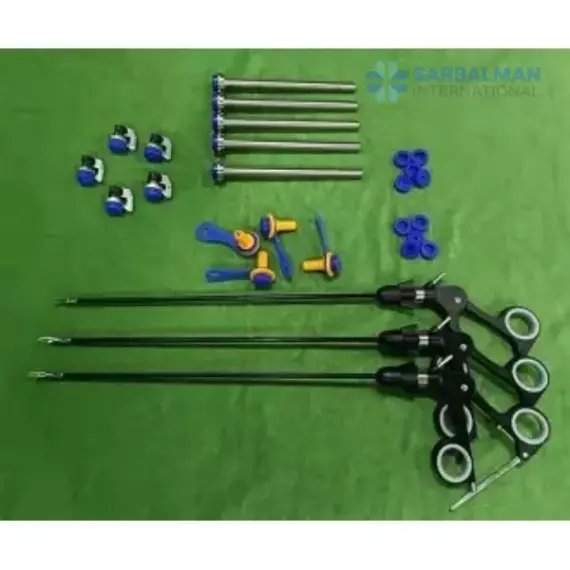
Laparoscopic reducers are small adapter tubes used to step down the internal diameter of a trocar port so that smaller instruments can be used through a larger cannula. By fitting securely inside the port, they maintain a gas-tight seal while allowing 5 mm or similar instruments to pass smoothly. Surgeons choose laparoscopic reducers to avoid extra incisions, increase instrument flexibility and keep pneumoperitoneum stable throughout minimally invasive procedures.
Description
Laparoscopic reducers (often called trocar reducers) are precision adapters designed to reduce the internal diameter of a trocar or cannula so that different-sized laparoscopic instruments can be used through the same port. Instead of placing multiple trocars or enlarging an incision, the surgeon simply inserts a reducer into the existing cannula, instantly converting, for example, a 10 mm port into a 5 mm working channel while preserving insufflation.
Key Features and Benefits
-
Port size conversion: Allows smaller-diameter instruments and scopes to pass through larger trocars, commonly in combinations such as 10–5 mm or 12–5 mm.
-
Secure, gas-tight fit: Carefully machined surfaces and seals help maintain pneumoperitoneum and minimise CO₂ leakage, even when instruments are exchanged frequently.
-
Surgical-grade construction: Typically manufactured from stainless steel or high-performance polymer, providing durability, corrosion resistance and full compatibility with standard sterilisation methods.
-
Smooth instrument passage: Internal contours are designed to guide instruments without snagging or scratching, reducing wear on expensive laparoscopic tools.
-
Reusable and cost-effective: Robust, autoclavable design supports repeated use, lowering per-procedure costs compared with disposable alternatives.
Common Uses and Applications
-
General laparoscopic surgery: Lets surgeons switch between different instrument diameters during procedures such as cholecystectomy, appendectomy or hernia repair without changing ports.
-
Gynaecology and urology: Supports flexible instrument selection in hysterectomy, myomectomy, nephrectomy and other advanced procedures.
-
Bariatric and colorectal surgery: Helps manage multiple energy devices, scopes and staplers that may require varying port sizes over the course of an operation.
Comparison with Alternative Approaches
Without laparoscopic reducers, teams often need to insert multiple trocars of different sizes or upsise an incision to accommodate larger instruments. This can increase operative time, add to consumable costs and potentially create more trauma to the abdominal wall. Reducers allow a single, well-positioned trocar to serve several functions, simplifying port planning and helping keep access sites as small and as few as possible.
Quality and Practical Significance
High-quality laparoscopic reducers are engineered for precise tolerance and secure locking with standard cannulas, ensuring confidence every time instruments are exchanged. By improving flexibility, preserving pneumoperitoneum and reducing the need for extra ports, they play a quiet but crucial role in delivering the full benefits of minimally invasive surgery—shorter recovery, less pain and better cosmetic outcomes—while also supporting efficient, economical operating room workflows.