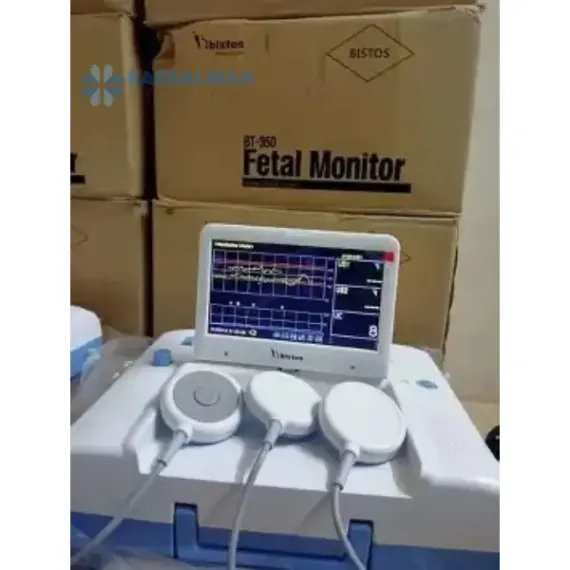
Cardiotocography(CTG) Machine
Free!
A Cardiotocography (CTG) Machine is an electronic fetal monitor that tracks a baby’s heart rate and the mother’s uterine contractions at the same time. Using two abdominal sensors, it provides a real-time trace and audio heartbeat, helping clinicians detect distress early and monitor labor progress accurately. Widely used in hospitals and maternity clinics, it offers non-invasive, continuous monitoring for routine and high-risk pregnancies, supporting safer, better-informed delivery care.
Description
A Cardiotocography (CTG) Machine, also called a fetal monitor, is an electronic device used to continuously record a baby’s heart rate and the mother’s uterine contractions during pregnancy and labor. It works with two external sensors placed on the abdomen: one uses ultrasound to track fetal heart activity, while the other measures contraction timing and frequency. The machine displays both signals together as a real-time trace, helping clinicians assess fetal wellbeing and labor progress with greater confidence.
Key features and benefits:
-
Dual-parameter monitoring: Displays fetal heart rate and uterine contractions side by side for complete clinical context.
-
Clear screen and trace output: Real-time graphs and numeric values support quick decision-making; many units also allow print or digital storage for records.
-
Audio heartbeat playback: Lets staff hear heart tones while viewing the trace.
-
Adjustable alarms and alerts: Helps detect signs of fetal distress or abnormal contraction patterns early.
-
Non-invasive routine use: External monitoring is comfortable for most patients and suitable for repeated checks.
-
Built for clinical safety: Typically designed under medical-device quality systems and aligned with medical electrical-safety standards used for monitoring equipment.
Common use cases and applications:
-
Continuous monitoring during labor, especially in high-risk pregnancies
-
Antenatal testing to evaluate fetal wellbeing
-
Tracking response to induction or augmentation of labor
-
Use in hospitals, maternity clinics, and labor wards
Compared with a handheld fetal Doppler or manual listening, a CTG machine provides a continuous, documented pattern over time, making it easier to spot concerning trends. It’s a core tool for modern maternity care, supporting safer deliveries and timely intervention when needed.