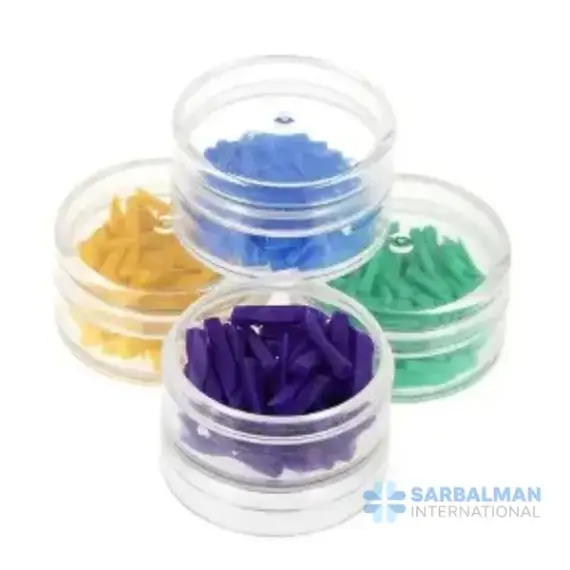
Wedges
Free!
Wedges are color-coded, anatomical inserts used with matrix bands to seal the gingival margin and create tight contacts. Their flexible polymer compresses for a snug fit without injuring tissue, reducing overhangs and improving contour in Class II composites. Easy to place and available in multiple sizes—including translucent options for cure-through—they streamline posterior restorations and help deliver clean margins, natural anatomy, and predictable results.
Description
Wedges are small, tapered interproximal aids used with matrix systems to shape restorations and seal the gingival margin. Inserted below the contact, a wedge gently separates adjacent teeth to compensate for matrix thickness and prevents overhangs. These color-coded polymer wedges adapt to the papilla, compress slightly for a tight seal, and help deliver proper contour and contact in Class II composites and other posterior restorations.
Key features and benefits:
-
Anatomical, triangular profile with a concave side for close gingival adaptation.
-
Gentle tooth separation that creates tight, natural contacts after curing.
-
Smooth, non-splintering polymer that seats comfortably and resists collapse.
-
Color-coded sizes for quick selection and predictable fit.
-
Rounded edges to protect papilla and soft tissues.
-
Available in translucent options that allow light transmission for cure-through and in radiopaque options for visibility on X-rays.
Typical uses:
-
Class II composite restorations with sectional or circumferential matrices.
-
Removing excess resin cement around inlays, onlays, and crowns while protecting tissue.
-
Refining embrasures and emergence profiles during finishing and polishing.
How it compares:
-
Plastic wedges offer shape memory and translucency; wooden wedges provide strong compression but may splinter and do not transmit light.
-
Rings provide separation; wedges create the gingival seal. Most clinicians use them together for reliable contacts and margins.
Handling tips:
-
Pre-wedge when possible to open the contact and control moisture.
-
Seat from the wider embrasure, press apically to seal the margin, and verify matrix adaptation before curing.
-
Dispose after single use as part of standard infection-control practices.