
Airways Systems
Free!
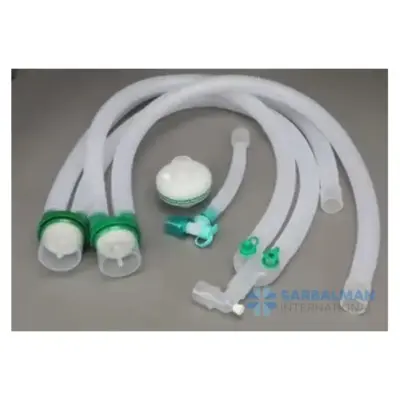
Airway systems are complete breathing circuits that connect ventilators or anesthesia machines to the patient’s airway. They typically include corrugated tubing, connectors, and accessories that provide a secure, low-resistance flow path for oxygen and anesthetic gases. Designed for reliability and ease of use, these systems help prevent leaks, simplify setup, and support safe ventilation in operating rooms, ICUs, and emergency care settings.
Description
Airway systems are complete breathing circuits designed to safely deliver gases between a ventilator, anesthesia machine, or resuscitation device and the patient’s airway. A typical system includes corrugated breathing tubes, connectors, Y-pieces, catheter mounts, elbows, filters, and sometimes reservoir bags. These components work together to provide a secure, low-resistance pathway for oxygen, anesthetic gases, or ventilatory support while minimizing leaks and contamination.
Key features and benefits include:
-
Corrugated, kink-resistant tubing that maintains gas flow even when flexed
-
Standard connectors compatible with most ventilators, anesthesia machines, and masks
-
Smooth internal surfaces designed to reduce resistance and support efficient ventilation
-
Options for adult and pediatric use, based on clinical requirement
-
Components that can be sterilized, disinfected, or supplied sterile and disposable depending on hospital protocol
Airway systems are widely used in operating theatres, ICUs, recovery rooms, emergency departments, and transport situations where mechanical ventilation or manual resuscitation is required. Compared to assembling loose, unmatched tubing and connectors, a dedicated airway system offers better compatibility, reduced setup time, and a more secure, leak-free circuit. Many setups can be configured with filters or HME devices to help maintain humidity and reduce cross-infection risk, as per institutional guidelines.
These systems are an essential part of modern respiratory and anesthesia care, ensuring that every breath delivered by the machine reaches the patient as intended. By choosing a reliable airway system, healthcare providers can improve safety, simplify workflow, and support consistent, high-quality patient care.