Forceps
Free!
Forceps are essential medical instruments used to grip, hold, clamp, or maneuver tissue and sterile materials during procedures. Common in surgery, emergency care, dental work, and gynecology, they give clinicians precise control where fingers can’t safely reach. With reliable tip alignment and a firm, slip-resistant grip, forceps help reduce tissue trauma, improve handling accuracy, and keep procedures efficient and hygienic.
Description
Forceps are precision hand instruments used by medical professionals to grasp, hold, clamp, manipulate, or remove tissue and materials during clinical and surgical procedures. Designed for control in delicate environments, they act as an extension of a clinician’s fingers, offering stronger grip, better reach, and safer handling when direct touch isn’t possible or advisable.
Key features and benefits
-
Secure, slip-resistant grip: Serrated tips or jaws help hold tissue, gauze, needles, or vessels steadily without sliding.
-
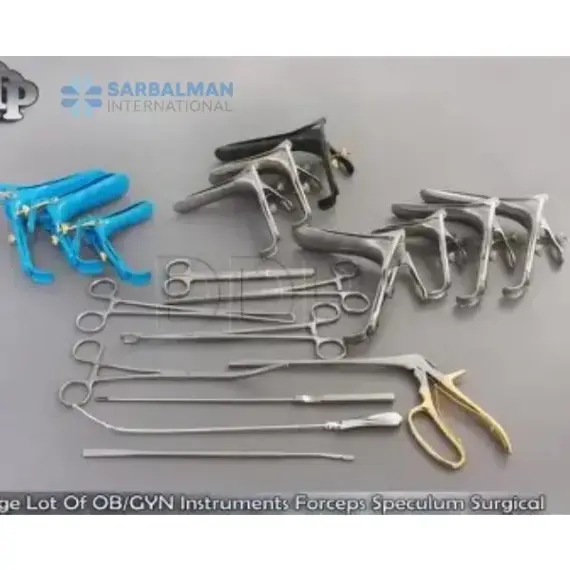
Purpose-built designs: Available in many patterns—such as tissue forceps for gripping skin or fascia, hemostatic/artery forceps for clamping blood vessels, dressing forceps for handling sterile materials, and specialized types for gynecology, dentistry, and microsurgery.
-
Balanced control: The hinge and handle geometry provide consistent pressure and fine control, reducing fatigue during long procedures.
-
Durable construction: Typically made from corrosion-resistant surgical-grade metal to withstand repeated sterilization and daily clinical use.
-
Smooth finish and alignment: Ensures precise closure at the tips for reliable handling and minimal trauma to surrounding tissue.
Common use cases
Forceps are standard tools in operating rooms, emergency departments, outpatient clinics, dental practices, and labor rooms. They’re used for wound care, suturing assistance, vessel clamping to control bleeding, tissue dissection, foreign-body removal, catheter placement support, and handling sterile dressings.
Compared to similar tools
Unlike clamps that are mainly for occlusion, forceps offer both gripping and fine manipulation. Compared with fingers or basic tweezers, medical forceps provide stronger bite, better reach, and more consistent control—especially under sterile conditions.
Overall, forceps are essential, versatile instruments that support safer, faster, and more precise care across multiple medical specialties.