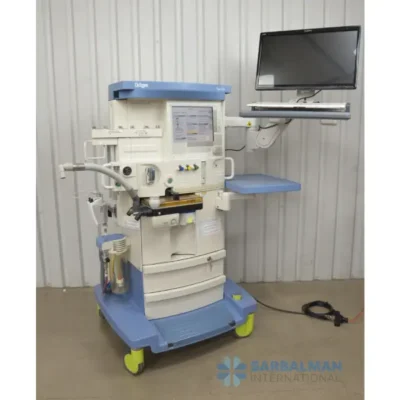

Ventilator
Free!
A ventilator is an advanced breathing machine that delivers accurately controlled breaths to patients who cannot breathe adequately on their own. Used in ICUs, operating rooms and emergency care, it regulates airflow, pressure and oxygen levels while continuously monitoring the patient. Healthcare providers choose ventilators to ensure stable, long-term respiratory support, reduce staff workload and provide a higher standard of safety for critically ill patients.
Description
A ventilator is a life-support device that helps patients breathe when they are unable to do so effectively on their own. It delivers carefully controlled volumes or pressures of air–oxygen mixtures through an endotracheal tube, tracheostomy tube or non-invasive interface. Modern ventilators continuously monitor pressures, flow and volumes, and adjust the breathing cycle according to the parameters set by the clinician, providing reliable mechanical ventilation in critical situations.
Key features and benefits typically include:
-
Multiple ventilation modes (volume, pressure and support modes) to match a wide range of clinical needs
-
Intuitive touchscreen display with real-time waveforms and alarms for safe, easy monitoring
-
Precise control of tidal volume, respiratory rate, inspiratory/expiratory ratio and oxygen concentration
-
Built-in safety features such as pressure limits, apnea backup and disconnection alarms
-
Compatibility with adult, paediatric and sometimes neonatal patient circuits
-
Integrated humidification and filtration options to protect the patient’s airway and equipment
Ventilators are used extensively in intensive care units, operating theatres, emergency departments, recovery rooms and transport settings. They support patients with conditions such as acute respiratory distress, pneumonia, head injury, neuromuscular disease, severe trauma and post-operative respiratory failure. Compared with manual methods like bag-valve-mask ventilation or basic oxygen therapy, an electronic ventilator provides far more consistent, finely controlled breathing support over long periods, reducing the workload on staff and improving patient stability.
Most hospital ventilators are engineered from durable, medical-grade components and are designed to integrate with central gas supplies, monitoring systems and hospital power infrastructures. For any facility managing critically ill patients, a dependable ventilator is an essential investment that directly influences survival, recovery and the quality of intensive care.